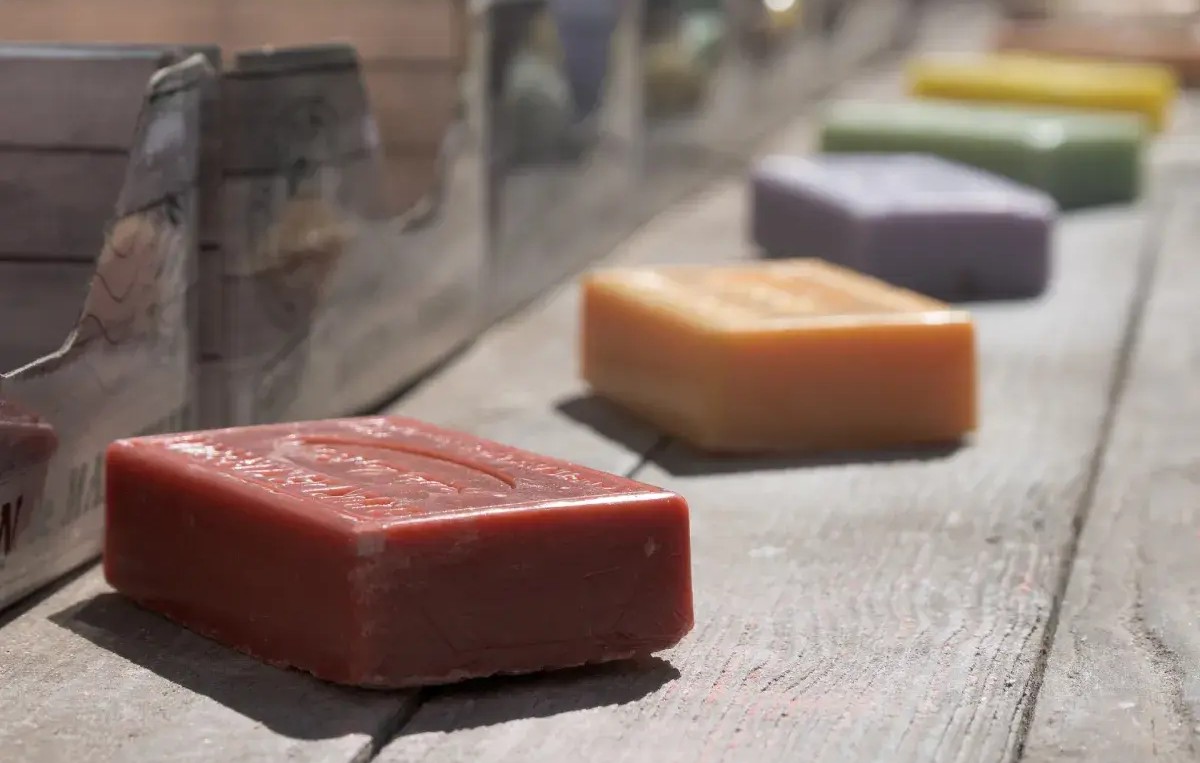
Soap has a long history stretching right back to the Sumerians in modern-day Iran. They developed the first recipe for something like soap around 4,500 years ago. Modern bars of soap are usually made with vegetable fats such as coconut oil. Soaps made from animal fats are predominantly produced from tallow, bone fat and lard and are usually heavily perfumed.
Due to its cleansing effect, the classic bar of soap was a bestseller for a long time: available in a vast array of shapes and colours, with the scents of fruits, flowers or spices, it was a cleaning product, care product and luxury item all in one. Bars of soap were also the standard in public washrooms in the past.
However, they had advantages and disadvantages: the used bits in the soap dishes soon looked grubby and unappealing. Many users were also uncomfortable with using wet soap that had just been touched by strangers. The frequency with which they are touched also tends to make bars of soap less hygienic than cream and foam soap.