Integration into hygiene strategies and compliance: Managing safety professionally
Every company should implement structured hygiene plans based on clear guidelines. Frameworks such as international HACCP principles, WHO guidance, and statutory requirements—including the EU Food Hygiene Regulation or national infection prevention and health safety acts—define comprehensive compliance standards for workplace hygiene. An effective hygiene plan outlines all infection prevention measures, from hand hygiene and ventilation to personal protective equipment.
Modern organizations increasingly rely on digital tools for real-time cleaning cycle monitoring and automated documentation. Smart sensors trigger cleanings as needed and provide compliance records for audits, saving both time and resources.
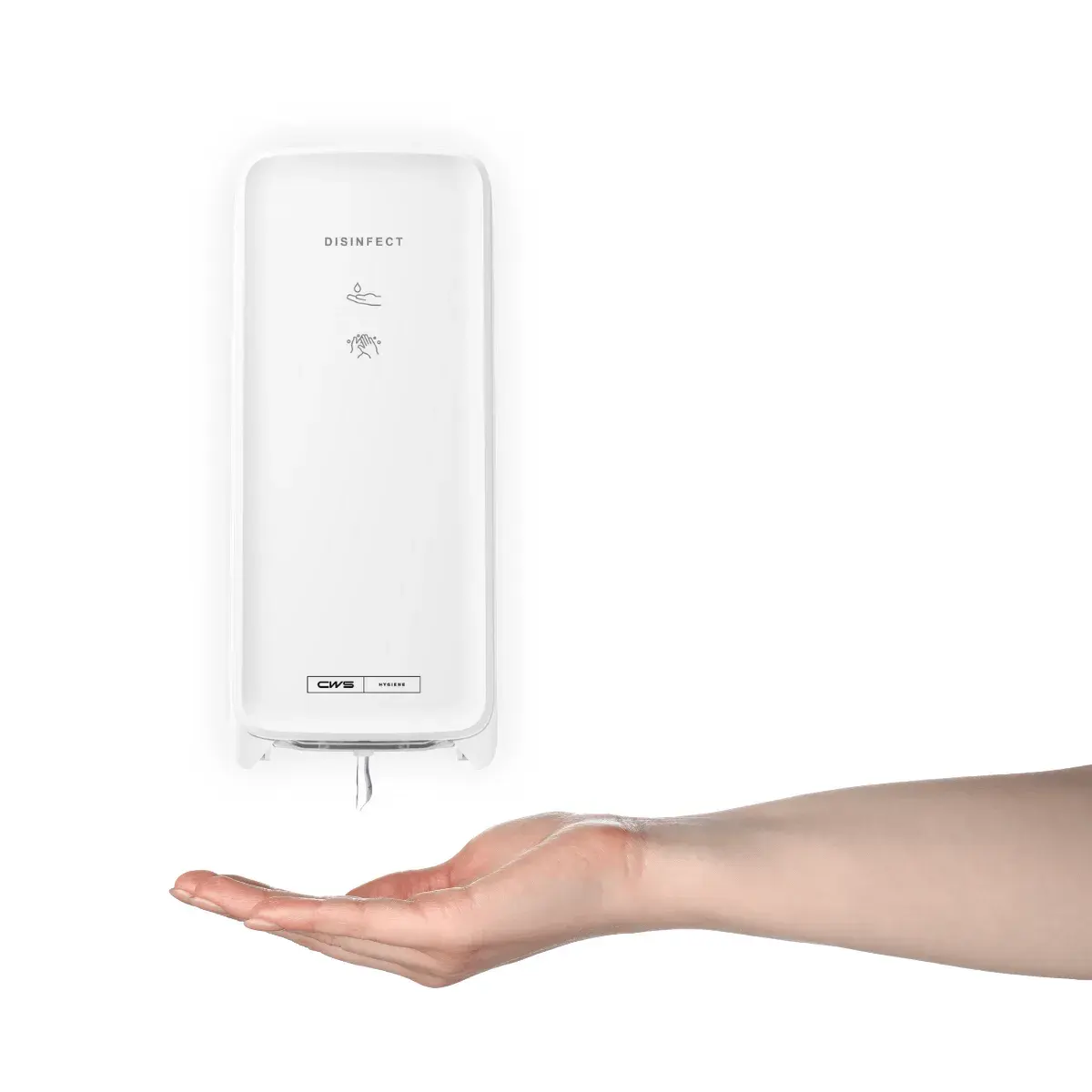
Alongside soap and disinfectant dispensers, CWS Hygiene also offers hand lotion dispensers for skin care after disinfection and cotton towel dispensers for hygienic drying after washing. Using the latest IoT technology, all devices can be integrated into the smartMate IoT washroom management system, allowing you to monitor fill levels, cut costs, and reduce waste.
Short, clear rules, tailored measures, and consistent monitoring make workplace hygiene both effective and sustainable.